
Emerging Trends in Fintech from 6 Months of Newsletters 🕵️♂️
Reviewing 6 Months of Fintech Weekly
Welcome back, to Fintech Weekly.
This week is the 26th consecutive issue of Fintech Weekly, marking 6 months of newsletters! I am delighted to reach this milestone and look forward to plenty more to come.
When starting this newsletter, the intention was to create an incentive to stay up-to-date with the emerging trends in the Fintech space. My PhD and Postdoctoral days left me feeling as though I was aware of emerging trends, but very much on the outside looking in. Moving to my current role as Head of Product at a Fintech Startup, I was very much in the trenches, but I needed an outlet to look up from our corner of the Fintech industry every so often and check the prevailing winds to make sure that we are always aware of what way the industry is moving. Against this metric, the newsletter has been an enormous success.
To mark the occasion, this week’s newsletter will take a slightly different format reviewing the last six months to give an overview of six emerging trends in Fintech that have caught my attention:
👍 Who is doing payments right? 👍
👎 When have payments gone wrong? 👎
🧑💻 Where are the emerging Fintech hubs? 👩💻
🇬🇧 How have the UK developed their financial systems versus the US? 🇺🇸
🤑 Why are Central Bank Digital Currencies so controversial? 🤑
🔮 What does the future look like for payments? 🔮
👍 Who is doing payments right? 👍
Conversion is essential when it comes to payments. Businesses commit vast amounts of resources from cross-functional teams including Sales, Marketing, Product, and Engineering to carefully craft a user experience that guides a user to the point of checkout. For context, Shopify have reported that ~5% of sessions result in a user adding a product to their cart. However, of this 5%, it is reported that between 65% and 70% of shoppers abandon their purchase at the point of checkout. To resolve this, payment screens have started to look like this:
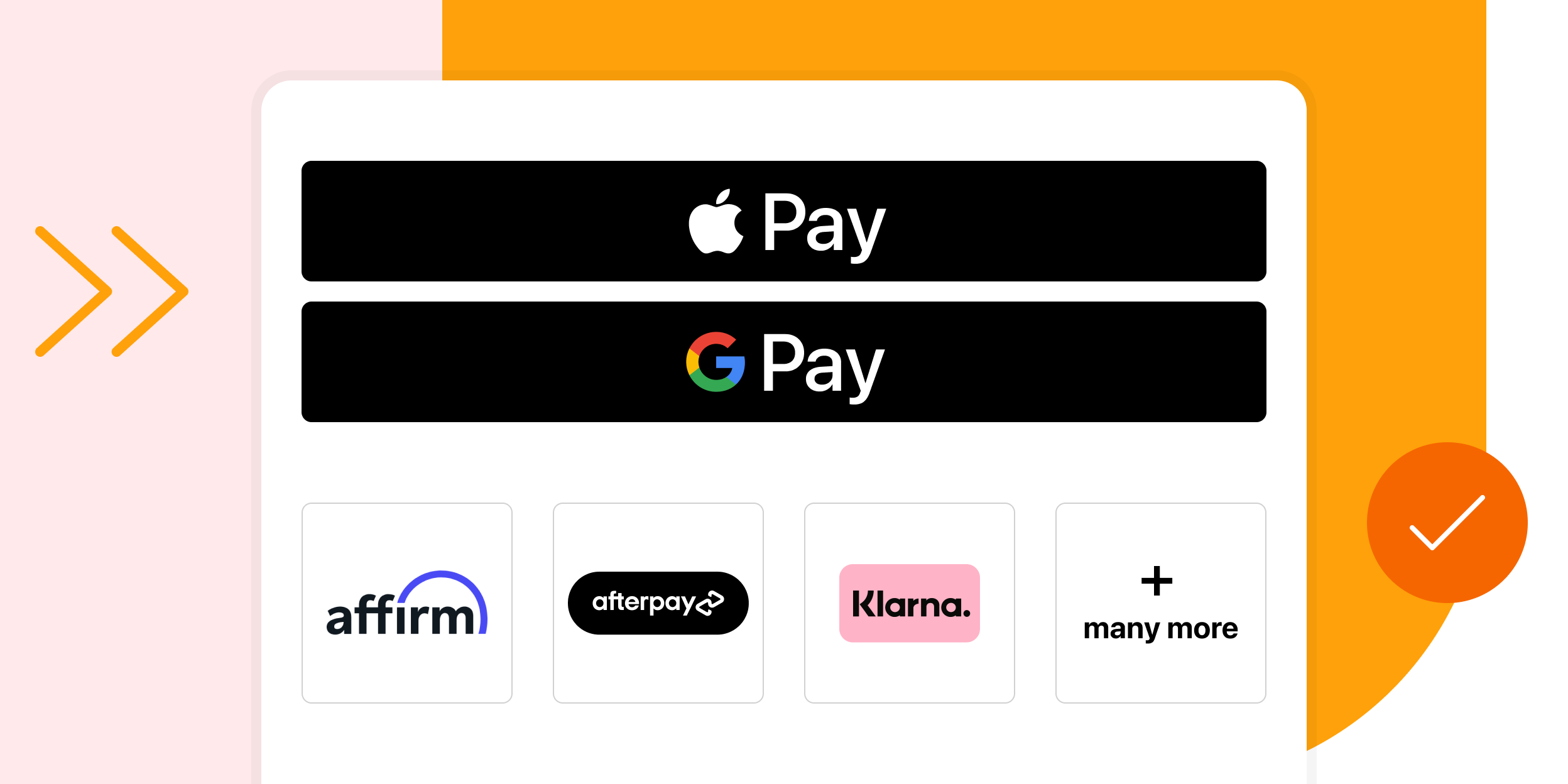
By offering customers choice, and reducing the friction they face at the point of checkout, merchants hope to reduce instances of cart abandonment. Wallet payment options like Apple and Google Pay offer users a convenient, and consistent user experience. While Buy Now Pay Later offers the additional benefit of reducing the upfront cost to customers. Unfortunately, a concerning trend is emerging showing that BNPL is increasingly being used for day-to-day expenditures like groceries rather than big-ticket purchases. Furthermore, these solutions can provide more detailed data on the user and the payment behaviour that helps processors accurately assess the risk of fraud, while also aiding credit providers in profiling the users.
While Wallet payments and BNPL providers are making an impact on the payments sector in the ‘west’, as illustrated above, checkout screens are becoming a patchwork quilt of logos vying for user attention. The illusive ‘Super App’ is yet to take over like WeChat has in China. WeChat is not only a Fintech but also a social media platform, as well as a solution for paying utility bills and accessing public services. This level of penetration into users’ daily lives means it has become the go-to solution for making payments. Some headline statistics of WeChat include their 1.6 Billion+ users, the 45 Billion daily messages being sent on the platform, and annual revenue of $17.49 Billion.
Sources:
Read back on previous issues covering: BNPL, WeChat
If you are enjoying the content so far, please take a moment to share the newsletter, it really helps me grow the platform and find new readers.
👎 When have payments gone wrong? 👎
There are still issues to be resolved when it comes to payments, in this section we will focus on two such cases. First, there is Amazon, which has become so good at payment user experience to the point of it being a criminal offence, at least that is the case of the FTC which recently accused Amazon of using “manipulative, coercive or deceptive user-interface designs known as ‘dark patterns’ to trick consumers into enrolling in automatically renewing Prime subscriptions”. It has been reported that the cancellation system is so hard to read it was internally code-named “Iliad”.
The second case of a bad payment experience is cryptocurrency. The crypto hype cycle is like a rollercoaster, and currently, it is in the news for all the wrong reasons. Last week the trial of former FTX chief, Sam Bankman Fried commenced where he stands accused of fraud and could face over 100 years in prison. Simultaneously, as the conflict in Israel and Palestine escalated this week, reports began to emerge that Hamas has used cryptocurrency as a mechanism for accepting funds.
Both stories do little to do away with the shady connotations that are associated with cryptocurrency. For the crypto enthusiasts who are willing to look past these stories, the actual user experience of making a crypto payment has been dreadful since its inception. Users are required to create a crypto wallet, authenticate the wallet to interact with a smart contract, pay highly volatile gas fees, and manage their wallet for fear of losing access to their crypto balance. However, there is hope in the form of ERC 4337, aka Smart Contract Wallets (SCWs). Without going into the details, SCWs intend to enable a user to interact with a dApp without having to understand the technical mechanics of the underlying technology.
Sources:
Read back on previous issues covering: Amazon, Smart Contract Wallets
🧑💻 Where are the emerging Fintech hubs? 👩💻
The really exciting aspect of Fintech is that it creates opportunities to disrupt the status quo. While the traditional financial hubs of the world have typically been in Europe and North America, their dominance was established in part due to the financial infrastructure they created, but this vast network of large banks and convoluted interconnected systems is now restricting the speed at which they can innovate. The analogy that springs to mind is that of a group of people training their horses to be faster and faster over the years, but now Henry Ford has just arrived in his car. We have already alluded to one of these Henry Fords earlier in this issue in the form of China and the dominance of WeChat and Alipay in that market. Other notable markets that are establishing themselves as leading Fintech hubs are India and Brazil
🇮🇳 India 🇮🇳

India’s success in fintech over the past decade has been in large part due to the proactive role of the Reserve Bank of India in establishing two systems, Aadhaar, the country’s pioneering digital ID system, and UPI, its real-time digital payments system. The object of Aadhaar is to issue every Indian citizen with a unique, 12-digit identification number, which could be cross-referenced with biometric information (fingerprints, iris scan data, and facial photograph) and basic biographical information held in a centralized government database. Today, the system is used by 1.3 billion Indians, over 90% of the population. As well as this, ~80% of Indian adults own a bank account created by the government (although many remain dormant). Then, in 2016, UPI was introduced, an instant, free national mobile payment system based on Aadhaar. With UPI, Indians can use an email-like address to transfer money directly from an Aadhaar-linked bank account, without needing a debit card or wallet. UPI has since become the world’s fifth-largest payment network by volume.
🇧🇷 Brazil 🇧🇷
In November 2020, the BCB created Pix, an instant payment system, which has had resounding success in the country. In the first year, it was reported to be used by 71% of the population, generating monthly volumes north of 100 million USD.
Before Pix, cash was the primary medium of exchange in Brazil, reportedly as much as 70% of transactions were made via cash. The payments industry in the country was underdeveloped, roughly 30% of the population was unbanked, credit transfers were only available during business hours, the fees on these transfers were high and it took almost 30 days for funds to transfer. Moreover, trust in the banking system was extremely low. However, Pix is an instant account-to-account payment system, meaning money is transferred directly into your account, available 24/7.
For consumers, Pix has increased financial inclusion as it is the first digital payment system used by almost 6 million people. It is free to use, available at all hours and funds are transferred in real time. It has also improved the security of digital payments. For businesses, Pix has had the added benefits of optimising cash flows and reducing the costs associated with e-commerce sales, allowing businesses to be more competitive on price.
Sources:
Read back on previous issues covering: Brazil, India
For more case studies on emerging Fintech hubs, check out Andreesen Horozitz
🇬🇧 How have the UK developed their financial systems versus the US? 🇺🇸
The UK is widely credited as being the global leader in Open Banking. The initiative started in 2017 when the CMA placed a legal mandate upon the nine largest UK banks and building societies (the CMA9) to make their customers ‘personal and business current account banking data available to authorized TTPs through secure APIs. Open Banking is an initiative which facilitates the secure sharing of account data with licensed third parties through Application Programming Interfaces (APIs), empowering customers with ownership of their data. The initiative aims to increase competition in retail banking by developing innovative products and services which will bring increased value to customers. Earlier this year, the number of active users of Open Banking in the UK passed 7 million (~10% of the population), and about 750,000 small to medium-sized businesses (SMBs) are using open banking products today, representing a penetration rate of 16%.
On the opposite side of the Atlantic, the US is lagging in their adoption of Open Banking and the modernisation of the financial infrastructure in general. While the Open Banking initiative in the UK was supported by a comprehensive regulatory framework, the fragmented nature of banking regulation across the 50 states of the US makes this more difficult to replicate. The US did celebrate the launch of FedNow earlier this summer, the instant payment system developed by the Federal Reserve. However, this can hardly be considered an innovative solution when Japan introduced instant payments in the 1970’s. While regulators and financial incumbents struggle to keep pace with innovation in the US, Fintechs are more than happy to disrupt where opportunities present. For example, we discussed the launch of Varo to Anyone in recent weeks, a solution which looks to disrupt the closed-loop payment systems like Cash App and Venmo, as well as FedNow, by leveraging users existing debit cards from their banks to process funds through the Visa network.
Sources:
Read back on previous issues covering: Open Banking, Varo, FedNow
🤑 Why are Central Bank Digital Currencies so controversial? 🤑
Central Bank Digital Currencies have been a recurring topic over the last six months. Back in July the Bank of International Settlements published the results of its 2022 survey of 86 central banks about their involvement in work on Central Bank Digital Currencies. The headline finding from the report was that 24 Central Banks will have a CBDC by the end of this decade. Active work on CBDCs is increasing with 93% of central banks carrying out some form of CBDC work, the majority of which is focused on retail CBDCs (15 retail and 9 wholesale). Emerging Markets and Developing Economies (EMDEs) are much more motivated and therefore, more advanced in their CBDC work when compared to other counterparts in Advanced Economies (AEs).
🇨🇳 China 🇨🇳
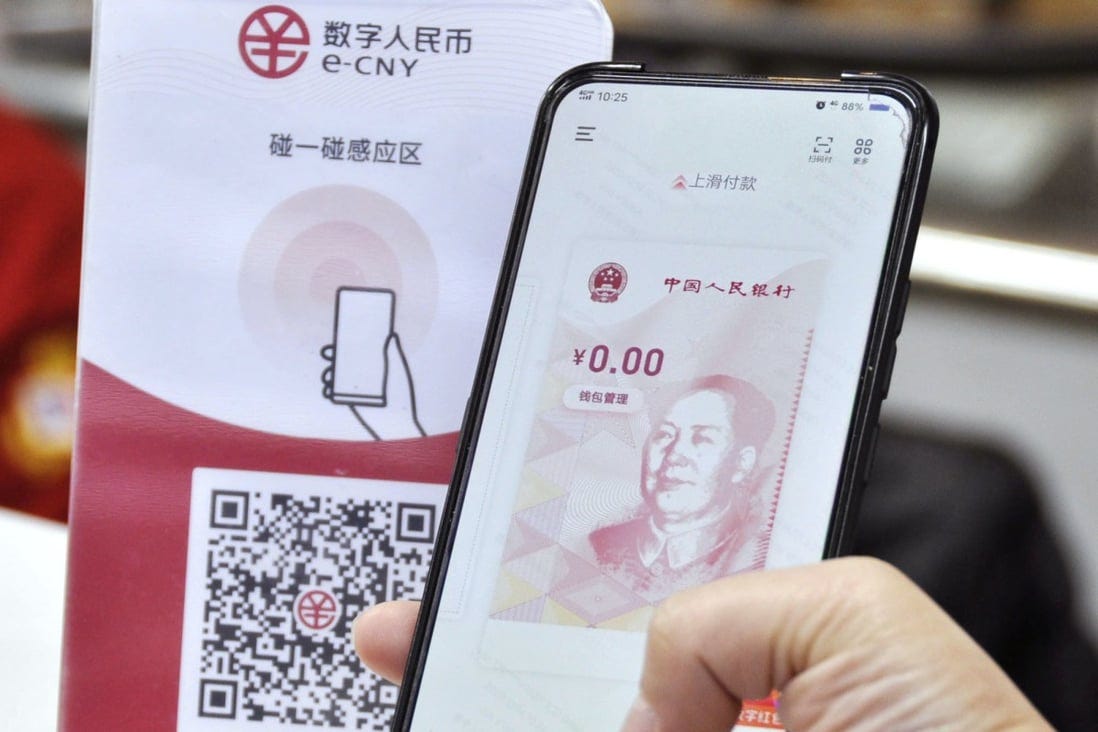
China remains the most advanced CBDC project. The central bank governor Yi Gang, reported that transactions using China's digital yuan hit 1.8 trillion yuan ($249.33 billion) as of June. Total e-CNY transactions reached 950 million, with 120 million wallets being opened. So far the e-CNY has been primarily used for retail transactions. e-CNY in circulation still only accounts for 0.16% of China's money supply as private payment solutions like Alipay have dominated the Chinese market in recent years.
🇺🇸 USA 🇺🇸
Meanwhile, the notion of a CBDC is a hotly debated topic in the USA ahead of next year’s presidential election. In recent weeks the CBDC Anti-Surveillance State Act was passed by the House Financial Services Committee (HFSC), the legislation aims to bar the Federal Reserve from issuing a Central Bank Digital Currency (CBDC) to individuals, as well as for conducting monetary policy. Some in the US look at the use of a CBDC in China as a tool for mass surveillance, while others fear that the legislation will restrict innovation and leave the US behind China in emerging Fintech.
🇪🇺 Europe 🇪🇺
As for Europe, The ECB is scheduled to decide whether to press on with a Digital Euro project in the coming weeks. ECB President Christine Lagarde told lawmakers on the EU Parliament's Economic and Monetary Affairs Committee. “The pilot will probably take us another two years, at least, before it’s the final say.” Lagarde noted that the challenge is to suppress “conspiracy theories” surrounding CBDCs, noting that the digital euro will need to offer privacy without full anonymity and be user-friendly, free and universal. The ECB is also making progress in their development of a Wholesale CBDC, which would be used exclusively by financial institutions, central banks, and other trusted entities involved in large-value, high-frequency transactions.
🌐 SWIFT 🌐
Finally, without going through the details of all ongoing CBDC projects, Swift, the global payments messaging platform which aims to deliver instant and frictionless cross-border transactions realises that, ironically, the same problems we face with traditional cross-border payment rails are set to be repeated with CBDCs. Currently, CBDCs are being developed in isolation, which could result in disparate ‘digital islands’ of fragmentation and bespoke messaging standards and protocols, leading to challenges in facilitating cross-border transactions. To resolve this issue Swift is beta-testing a pilot project which looks at interlinking CBDCs.
Sources:
Read back on previous issues covering: BIS, China, US, Europe, SWIFT
🔮 What does the future look like for payments? 🔮
Finally, as we look ahead to the challenges and opportunities in Fintech over the coming years, two trends, in particular, have grabbed my attention over the past six months of writing this newsletter. First, the use of Biometrics in payments presents opportunities to completely irradicate friction at checkout. As Amazon has shown with their Just Walk Out stores, there may no longer be a need to fumble around in search of your wallet, or even for your Apple Wallet. Scanning your palm may become the maximum amount of friction required to make a payment. This also has benefits for merchants and processors in their ability to detect fraudulent payment attempts. The obvious concern though is increasing the power of Big Tech firms like Amazon by arming them with even more of our data. Their track record to date of handling PII has left a lot to be desired.

Second, 2023 will go down as the year that AI truly took the buzzword crown from Blockchain/Crypto. One of the faces of the AI hype has been Sam Altman, CEO of OpenAI. Altman himself recognises the concerns we all have around AI’s ability to mimic human behaviour online, which makes fraud detection even more challenging. Altman’s crypto side hustle, Worldcoin was also launched this year as a solution that would enable a global financial network using eyeball-scanning technology to create a unique ID for all users. Worldcoin has also faced regulatory scrutiny though, and forced to cease operations in Kenya in recent weeks. Artificial Intelligence is already having an impact on payments and Fintech, and the pace of development is hard to keep up with, but that should not be used as a justification for lowering data protection standards.
Sources:
Read back on previous issues covering: Amazon Just Walk Out, Amazon One, Worldcoin.
Thanks for reading, as always, if you have any feedback or suggestions for topics I could cover in future newsletters please let me know by commenting through the link below.